Ascent Roofing & Restoration logo

EMERGENCY

EMERGENCY WATER EXTRACTION

Water damage is measured in hours. Standing water migrates into framing, subfloor, and wall cavities quickly, and microbial growth becomes a realistic concern inside 24 to 48 hours.

Extraction is the first move: get the bulk water out, then start a measured drying process.

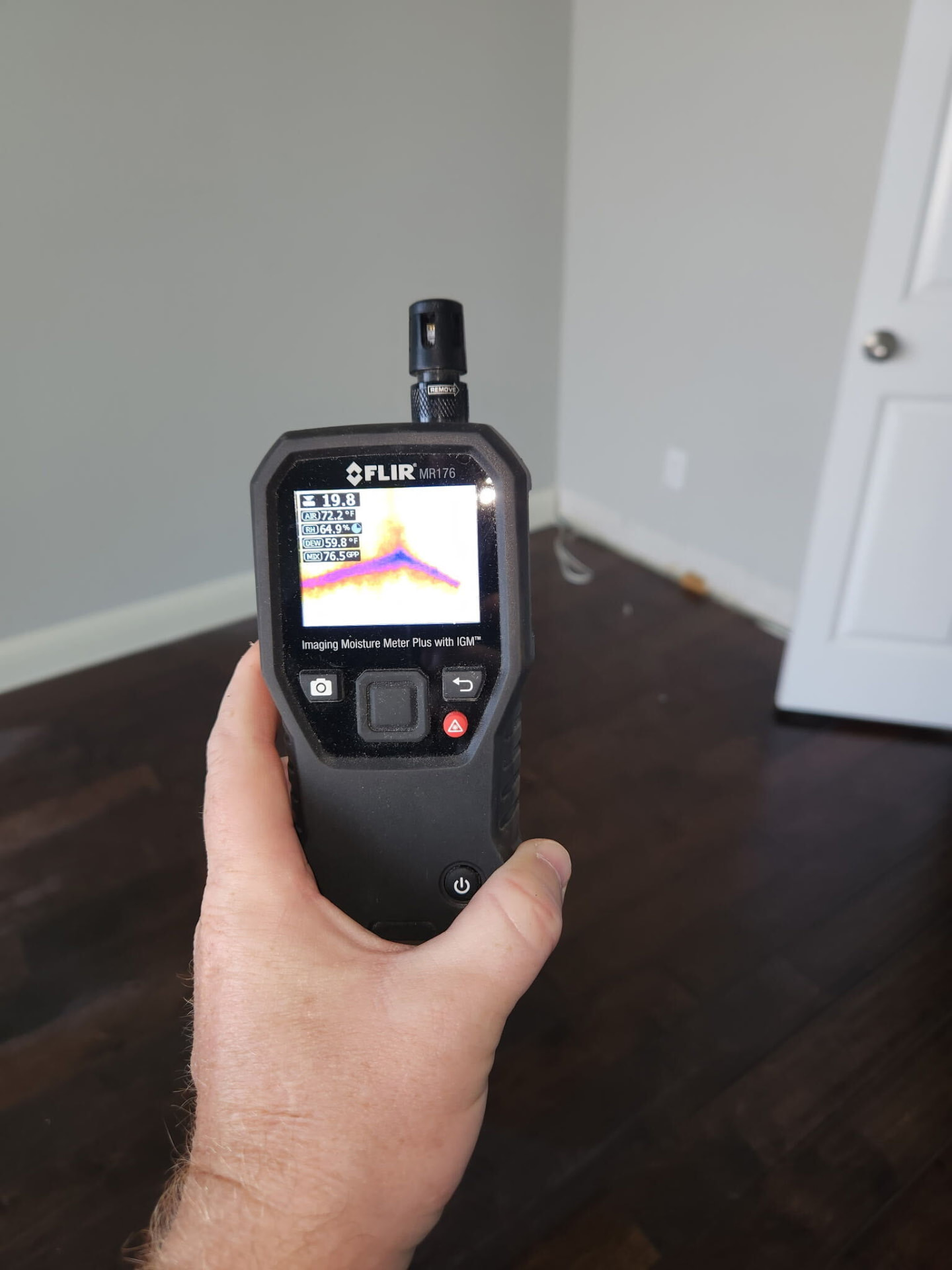
Handheld moisture meter showing a thermal view of an interior wall
Moisture inspection

EXTRACTION, THEN A DRYING PLAN

Crews arrive with truck-mounted and portable extraction, moisture meters, and thermal imaging. We map how far the water traveled, which is almost always farther than the visible wet line, and set air movers and dehumidifiers to that map rather than to guesswork.

Readings are logged daily. Equipment comes out when the materials hit dry standard, not when the floor feels dry to a hand.

WHERE THE WATER CAME FROM MATTERS

A supply-line break, a roof failure, and a sewer backup are three different jobs with three different safety protocols and three different insurance conversations. We categorize the loss on arrival and document it, because that classification drives what can be dried in place and what has to be removed.

If the source was the roof, the roof is part of the job. Extraction on a building that is still open is money spent twice.

HOW WE DOCUMENT IT FOR YOUR CARRIER

We are contractors, not public adjusters. Texas law is clear that a contractor working on your property cannot adjust your claim, and we don't pretend otherwise. What we do is build the record your carrier needs: dated photographs of every affected area, written scope of work, moisture readings logged over time, and a room-by-room inventory when contents are involved.

We meet your adjuster on site so the scope conversation happens with everyone looking at the same roof and the same readings. Where your policy allows, we bill your carrier directly so you are not floating the job on a credit card.

ONE CALL HANDLES THE WHOLE LOSS

A loss rarely stays in one category. These are the pieces most often attached to this one — same company, same file, same schedule.

COMMON QUESTIONS

Can wet carpet and hardwood be saved?
Sometimes. Clean-water losses caught quickly are often dried in place, including many hardwood floors using specialty mat systems. Contaminated water, delamination, and long dwell times usually mean removal, and we document why so the replacement is part of the claim.
How long does structural drying take?
Most residential losses run three to five days of monitored drying. Dense assemblies, plaster, and large commercial slabs take longer. You get daily readings so the timeline is not a mystery.
Do you handle mold?
We focus on rapid drying, which is the most effective mold prevention there is. Texas licenses mold remediation above a defined project size; where a job exceeds that threshold we coordinate with a licensed assessor and licensed remediation firm rather than working outside the rules.

FREE INSPECTION. WRITTEN REPORT EITHER WAY.

We walk the property, photograph what we find, and hand you a written report whether you hire us or not.

One property per customer, minor repairs only, materials on hand, at inspector's discretion, subject to safe roof access. Offer terms subject to confirmation.